July 15, 2026 · Traviar Editorial
The 1,000-Kilometer Test: Everything You Need to Know About the Muscat to Salalah Road Trip
The road stretches due south from Muscat like a ribbon slowly unwinding into emptiness. For the first 300 kilometers, you're still in the grip of the
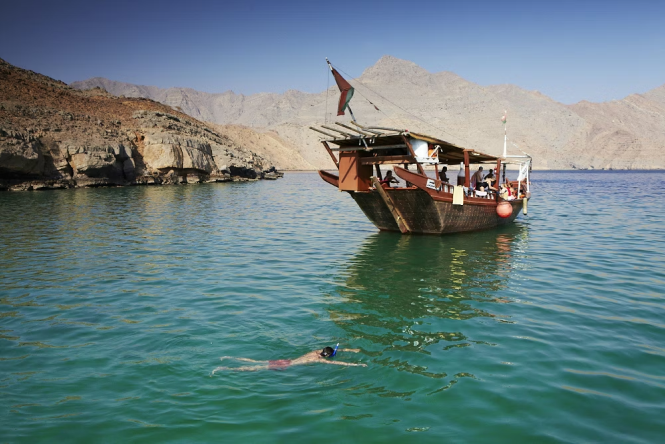
The road stretches due south from Muscat like a ribbon slowly unwinding into emptiness. For the first 300 kilometers, you're still in the grip of the hajjar Mountains and coastal towns—Sur's dhow harbors, the turquoise inlets of Wadi Shab. By kilometer 500, the landscape transforms into something primordial: the Rub' al Khali's edge, where sand dunes rise like frozen waves and the horizon bleeds into white heat haze. Then, unexpectedly, around kilometer 850, the air cools. Mist rolls down the mountainside. Green vegetation appears. You've crossed the threshold into Salalah—Oman's monsoon-fed paradise—and the 1,000-kilometer distance between these two cities suddenly feels less like an ordeal and more like a pilgrimage.
But here's the question every traveler and regional business professional asks: Is the drive worth it?
The short answer is yes—but only if you understand what you're choosing.
The 1,000-Kilometer Question: Is the Drive to Salalah Worth It?
Let's start with the raw geography. Muscat to Salalah is approximately 1,000 kilometers (some measurements push closer to 970km; it depends on your starting point in Muscat and your exit from Salalah). That's roughly the distance from London to Rome, or Boston to Miami. In Oman's context, it's a journey that bisects the entire sultanate, moving from the capital's urban sprawl, through the raw limestone highlands of the interior, and finally descending into the lush green amphitheater of Salalah's Khareef region.
The contrast is staggering. Muscat in summer: 45°C+, humid, aggressive sunlight bouncing off glass towers and concrete. Salalah during the monsoon months (July-September): 25°C, misty, draped in vegetation that shouldn't exist in the Arabian Peninsula. The 1,000 kilometers represent not just distance but an ecological and climatic boundary—a threshold between two entirely different Omans.
But here's the critical tension: you can cover this distance in two fundamentally different ways, and your choice determines everything.
The Desert Route (Route 31) is the speed run. It's brutal, monotonous, and psychologically exhausting—8 to 10 hours of near-straight highway through the Wahiba Sands and the flat plains of Al Wusta. It's the route you take when you need to arrive, not travel.
The Coastal Route (Route 17) is the scenic alternative. It adds 2 to 4 hours to your journey but threads through Sur, Duqm, and the Musandam-adjacent coves. It's slower, but it transforms the drive itself into the experience.
The honest truth: the Muscat to Salalah road trip is only worth it if you treat the road as the destination, not merely the means to one. If you're flying in for a single beach day, take the 1.5-hour flight. If you're treating this as a regional adventure—either for personal exploration or as part of a multi-stop business itinerary—then the drive becomes something else entirely: a rite of passage through one of the Middle East's most geologically and culturally diverse regions.
Route 31: The Brutal Efficiency of the Desert Highway
Route 31, also called the 'Adam-Thumrait' highway, is Oman's version of a transcontinental expressway. It's the fastest, most direct path between the capital and the southern sultanate, and if your only goal is speed, it delivers: 8 to 10 hours of driving time, depending on your pace and rest stops.
But let me be blunt: it's not pleasant.
The landscape is essentially flat, repetitive, and monotonous. You'll pass through the edge of the Wahiba Sands (where sand dunes occasionally drift onto the road), then into the flat, gravel plains of Al Wusta governorate. The sky is enormous but empty. The road is excellent—well-maintained asphalt with clear lane markings—but there's nothing to see. No towns of significance. No unexpected attractions. Just the sound of your engine and the hypnotic rhythm of the white center line disappearing beneath your hood.
Here's where Route 31 becomes genuinely challenging: the logistical black holes. Between 'Adam and Thumrait, there are roughly 200 kilometers where fuel stations are sparse and food options are limited to truck stops offering overpriced dates, dates, and more dates (though honestly, the dates are excellent). Your mobile signal will drop entirely for stretches. If you're driving an older vehicle or haven't serviced your car recently, this is where mechanical failures become genuinely problematic—you're far from rescue services.
The "Half-Tank Rule" is non-negotiable on Route 31: never let your fuel drop below half a tank at any point on this stretch. Gas stations in Thumrait and 'Adam exist, but they're not guaranteed to have fuel during peak travel times, and the next station might be 150 kilometers away.
This route is the right choice if you're:
- Returning to Muscat after a vacation and want to minimize drive time
- On a tight business schedule with a confirmed meeting in Salalah
- Fatigued and need the journey to be over as quickly as possible
But if this is your first time exploring Oman's interior, or if you have any flexibility in your schedule, the coastal route is almost always superior.
The Coastal Alternative: Why Route 17 is the Superior Choice
Route 17, which threads through Sur and Duqm before rejoining the main highway toward Salalah, is the drive that transforms a commute into an adventure. Yes, it takes 2 to 4 hours longer than Route 31—you're looking at 12 to 14 hours of driving time total—but the experiences along the way are incomparable.
Here's the route in brief: from Muscat, head south on Route 17 toward Sur (2 hours). Sur itself is worth a 1-hour stop—it's a fishing town with a genuine maritime heritage, home to traditional dhow shipbuilders and seafood restaurants that haven't changed in decades. The harbor is photogenic, and the underlying sense of centuries-old commerce lingers in the air.
From Sur, continue south on Route 17 toward Duqm (3 hours). This stretch is where the coastal drama peaks. You'll pass Ras Al Jinz, where loggerhead turtles nest (more on this below), and the landscape shifts from rocky coastline to sandy beach to the surreal pink-and-white salt lagoons of the Duqm region. These lagoons are where industrial salt ponds meet natural wetlands—it's visually dissonant and oddly beautiful.
Near Al Khaluf (between Duqm and the final descent toward Salalah), you'll encounter the "Sugar Dunes"—massive, blindingly white sand dunes that rise directly from the coast. They're Instagram-famous for good reason: they look photoshopped but are entirely natural. Stop here. Take photos. Understand that you're witnessing a geological rarity.
From Duqm, the highway turns inland and begins its slow climb toward the Salalah plateau. This is where Route 17 rejoins Route 31, and the final 200 kilometers become a shared experience. But by this point, you've seen so much that the desert monotony of the final stretch feels less oppressive.
The time investment on Route 17 is real, but here's what you gain: reduced highway hypnosis. You're stopping every few hours, engaging with new landscapes, breaking the psychological weight of long-distance driving. For solo drivers especially, this matters enormously.
Essential Stops: Where to Break the Journey Between Cities
The Muscat-to-Salalah route isn't just the highway; it's the accumulated experience of the stops you choose to make. Here are the non-negotiable ones:
Wadi Shab and Bimmah Sinkhole (30 minutes from Muscat) These are your first breaks after leaving the city. Wadi Shab is a true wadi—a seasonal river valley with pools of turquoise water backed by limestone cliffs. The walk to the main pool is about 45 minutes, and it's straightforward. Bimmah Sinkhole, nearby, is a natural phenomenon: a 40-meter-deep collapsed cavern filled with freshwater. Both are worth an hour of your time. They serve as a psychological reset after leaving the urban chaos of Muscat, and they're the proof-of-concept for what Oman's interior hides.
Sur: The Maritime Heart (2 hours from Muscat) Sur is where you experience Oman's historical identity as a maritime trading power. The old town is compact and walkable. Visit the dhow-building yards where carpenters still construct traditional wooden ships using methods unchanged for centuries. Grab lunch at one of the waterfront fish restaurants—expect to pay 5-8 OMR for fresh grilled hammour or kingfish. The seafood here is cheaper and fresher than anywhere in Muscat.
Ras Al Jinz Turtle Reserve (3.5 hours from Muscat) This is a overnight stop if you time it right. Ras Al Jinz is Oman's premier nesting site for loggerhead turtles, and if you arrive between May and October, you have a legitimate chance of witnessing a nesting event—a female turtle emerging from the sea, digging a pit in the sand, and laying 100+ eggs. The experience is humbling and primal. The reserve operates a visitor center with a small guesthouse (around 50 OMR for a basic room). Night tours are 15-20 OMR per person. Even if you don't see a turtle, the coastal landscape here is dramatically different from central Oman—more open, more marine-focused.
Duqm: The Industrial-Natural Hybrid (5-6 hours from Muscat) Duqm is often overlooked because it's not conventionally 'beautiful.' It's a deep-water port and the terminus of the internal oil and gas infrastructure. But precisely because of this industrial development, the contrast between human engineering and the raw natural environment is stark. The salt lagoons are surreal—pink and white shallow basins created both by nature and intentional salt harvesting. Spend an hour here. Grab coffee (2-3 OMR) at one of the port-side cafes. Understand that Oman's economy runs through places like Duqm, not just through the tourism brochures.
Al Khaluf: The Sugar Dunes (7-8 hours from Muscat) Before you reach the final mountain pass into Salalah, the Sugar Dunes are an essential photo stop. They rise white and otherworldly against the turquoise Arabian Sea. If you have a high-clearance vehicle or a 4x4, you can drive directly onto the dunes—the sand is relatively firm near the coast. Spend 30 minutes here. Take the photos. Feel small.
The Green Curtain: The Mountain Descent (8-10 hours from Muscat) This is not a 'stop' per se, but it's the most psychologically significant moment of the entire drive. Around kilometer 950, you'll begin climbing into the Salalah escarpment. The landscape transforms in real time. Suddenly, after 900 kilometers of arid, rocky, or sandy terrain, green vegetation appears. Trees. Grass. Mist. Local Omani drivers call this moment "crossing the Green Curtain," and it's the visual climax of the journey. The final 50 kilometers into Salalah are winding, steep, and require full attention—but they're also stunning.
Safety and Survival: Navigating the 'Empty' Stretches
The Muscat to Salalah road trip is fundamentally safe—Oman has one of the Middle East's best road safety records, and the highways are well-maintained. But there are specific hazards that casual travelers often underestimate.
The 'Camel Warning': Why You Must Never Drive After Sunset
This is non-negotiable. Between dusk and dawn, camels and other livestock wander onto Route 31 and Route 17. A collision with a camel at highway speed is fatal—for the driver, the passengers, and the camel. Omani drivers know this instinctively; they plan their departures and arrivals around daylight hours. A camel at night, illuminated only by your headlights, gives you maybe two seconds to react. Plan your drive to arrive at your destination before sunset. If you're leaving Muscat in the afternoon, you'll arrive in Salalah around 9-10 PM on the fast route, or 11 PM-midnight on the coastal route. This is acceptable. Leaving Muscat after 3 PM is risky; you're gambling with a night-time arrival, which you want to avoid.
Fuel Strategy: The 'Half-Tank Rule'
I've mentioned this, but it bears repeating. Every major town—Muscat, Sur, Duqm, Ibra—has reliable fuel stations (Shell, Oman Oil). In between, stations are sporadic. Your strategy: refuel in Sur (if taking Route 17) or at the last station before entering the Al Wusta region on Route 31. Never let your tank drop below half-full once you've committed to the central plateau. A breakdown in the Wahiba Sands during midday heat is survivable but unpleasant. A breakdown at night is dangerous.
Mobile Connectivity: Where the Signal Drops
Your mobile signal (Oman's carriers are Omantel, Ooredoo, and Zain) will drop entirely in sections of the central plateau, particularly between Thumrait and the point where the road begins climbing toward Salalah. This is typically the 200-kilometer stretch between kilometers 750 and 950 of your journey. Download offline maps (Google Maps allows this—download the Oman region before you depart). Carry a power bank rated at 20,000 mAh minimum. Your GPS will work fine without cellular signal; it relies on satellite positioning. But if your phone dies, you're visually navigating, and mistakes are more costly. A small compass is not overkill.
Vehicle Preparation: Do You Actually Need a 4x4?
The short answer: not for the highways themselves. Route 31 and Route 17 are paved, well-maintained, and accessible to any standard sedan. However, the best detours—driving into the Wahiba Sands, accessing certain wadis, reaching hidden beaches—all benefit from a 4x4 or high-clearance vehicle. If this is purely a highway journey, your current car will do fine. If you want to explore beyond the tarmac, rent a 4x4 (60-80 OMR per day from companies like Europcar or Thrifty in Muscat) or ensure your vehicle has decent ground clearance and decent tires.
Timing Your Trip: The Khareef Factor
Khareef is the Arabic term for the monsoon season, and it's the primary reason travelers visit Salalah at all. The phenomenon runs from July through September (sometimes extending into early October), when the Indian Ocean monsoon affects Oman's southern coast while the rest of the Arabian Peninsula bakes under unbearable heat.
During Khareef, Salalah's landscape transforms. The coastal plateau becomes lush green. Humidity climbs, but temperatures remain moderate—typically 22-28°C compared to Muscat's 42-46°C in summer. Waterfalls cascade down the mountainsides. The beaches are moody and dramatic, wrapped in white mist. It's the closest thing the Arabian Peninsula has to a tropical monsoon experience, and it's genuinely unique.
Here's the catch: everyone knows this. Peak Khareef (mid-July through August) means surging traffic, inflated hotel prices (doubles jump from 30-50 OMR in off-season to 80-150+ OMR during Khareef), and packed attractions. A 12-hour drive from Muscat to Salalah during peak season might include weekend traffic in Muscat, congestion through Sur, and potentially slow movement on the Salalah approach road.
Additionally, the mountain passes near Salalah can be genuinely hazardous during heavy Khareef rainfall. The mist is beautiful but reduces visibility to 50-100 meters on the descent. Rain makes the roads slick. Locals slow down noticeably, and so should you. Plan for an extra hour on your arrival time if you're driving into Salalah during peak monsoon.
The sweet spot for the road trip itself is early July or late September—you catch the Khareef without the absolute peak crowding, and weather is stable enough for safe driving.
Logistics for the Modern Professional: Flying vs. Driving
If you're a regional business professional—a consultant, engineer, or manager with occasional Salalah site visits—the drive versus flight decision is economic, logistical, and psychological.
The Flight: 1.5 hours, 80-150 OMR
Oman Air and FlyDubai operate the Muscat-to-Salalah route. Flight time is 1.5 hours. Add 2 hours for airport procedures, and you've made the journey in